
Sappho
- Born
- c. 630 BCE
- Died
- c. 570 BCE
Read transcript
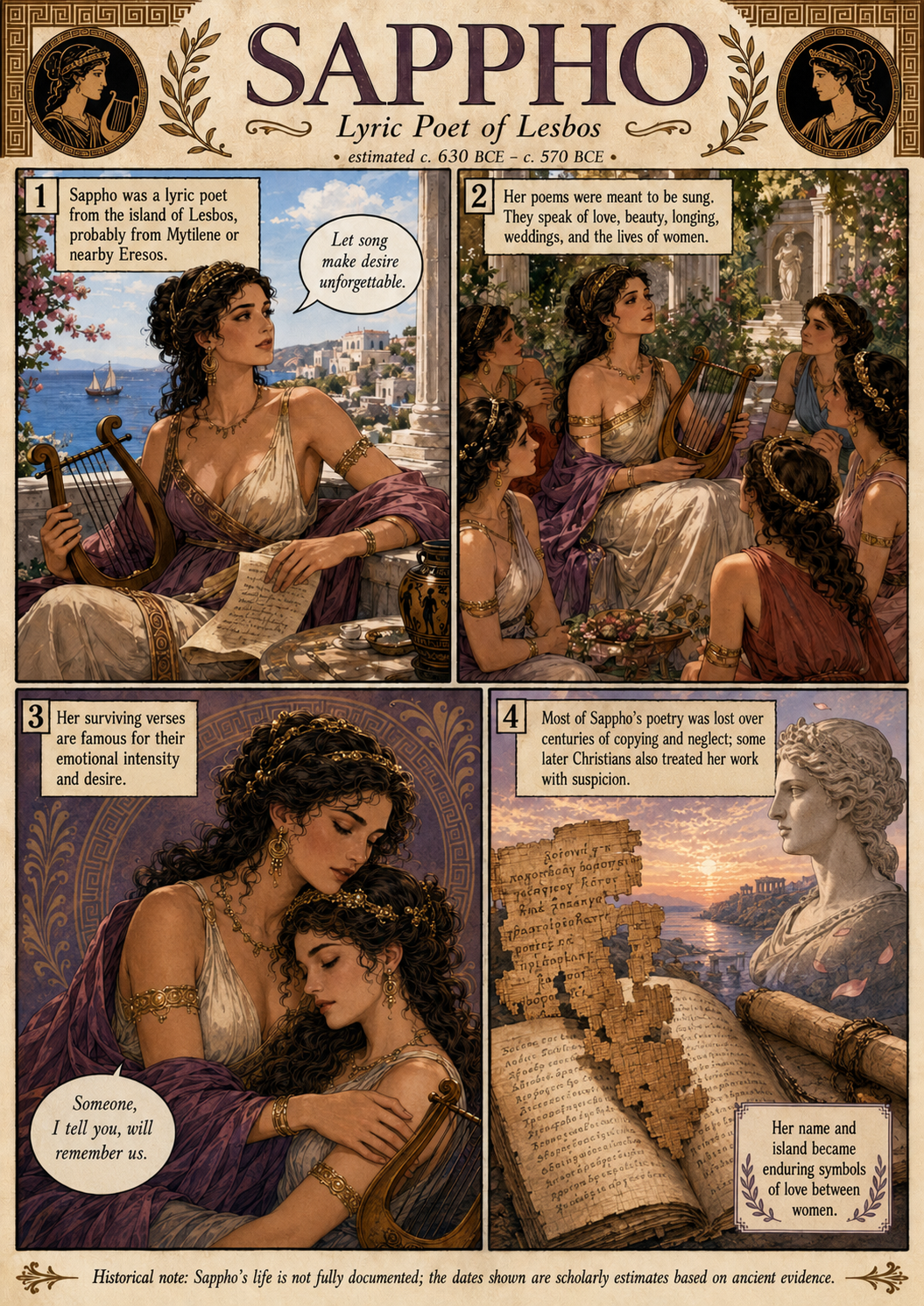
A parchment-style comic portrays Sappho with a lyre among women on Lesbos and reflects on her poetry, desire, and fragmentary legacy.
-
PanelTitle TextSappho. Lyric Poet of Lesbos.
Estimated c. 630 BCE – c. 570 BCE.
-
PanelPanel 1 — Poet of Lesbos SceneSappho holds a lyre on a terrace overlooking the Aegean Sea.
TextSappho was a lyric poet from the island of Lesbos, probably from Mytilene or nearby Eresos.
Let song make desire unforgettable.
-
PanelPanel 2 — Poems meant to be sung SceneSappho plays the lyre for a circle of women in a flowered courtyard.
TextHer poems were meant to be sung. They speak of love, beauty, longing, weddings, and the lives of women.
-
PanelPanel 3 — Emotional intensity and desire SceneSappho embraces another woman, a lyre resting beside them.
TextHer surviving verses are famous for their emotional intensity and desire.
Someone, I tell you, will remember us.
-
PanelPanel 4 — Surviving fragments SceneFragmented papyri and scrolls lie before a stone bust at sunset.
TextMost of Sappho's poetry was lost over centuries of copying and neglect; some later Christians also treated her work with suspicion.
Her name and island became enduring symbols of love between women.
-
PanelHistorical note TextSappho's life is not fully documented; the dates shown are scholarly estimates based on ancient evidence.
Fact-check note: Even Sappho’s dates are scholarly estimates, and very little of her biography is secure. Her poems were composed for performance and include desire directed toward women. The statement that “later Christians” treated her work with suspicion implies a cause for its loss that historians cannot establish; changing literary tastes, manuscript transmission, and the fragility of ancient media are better-supported explanations. “Someone, I tell you, will remember us” is a recognizable translation of fragment 147; other dialogue is interpretive. Classical overview · Modern discussion of the uncertain dates